by Akinmayowa Shobo | Jul 13, 2026 | Annual Flood Outlook
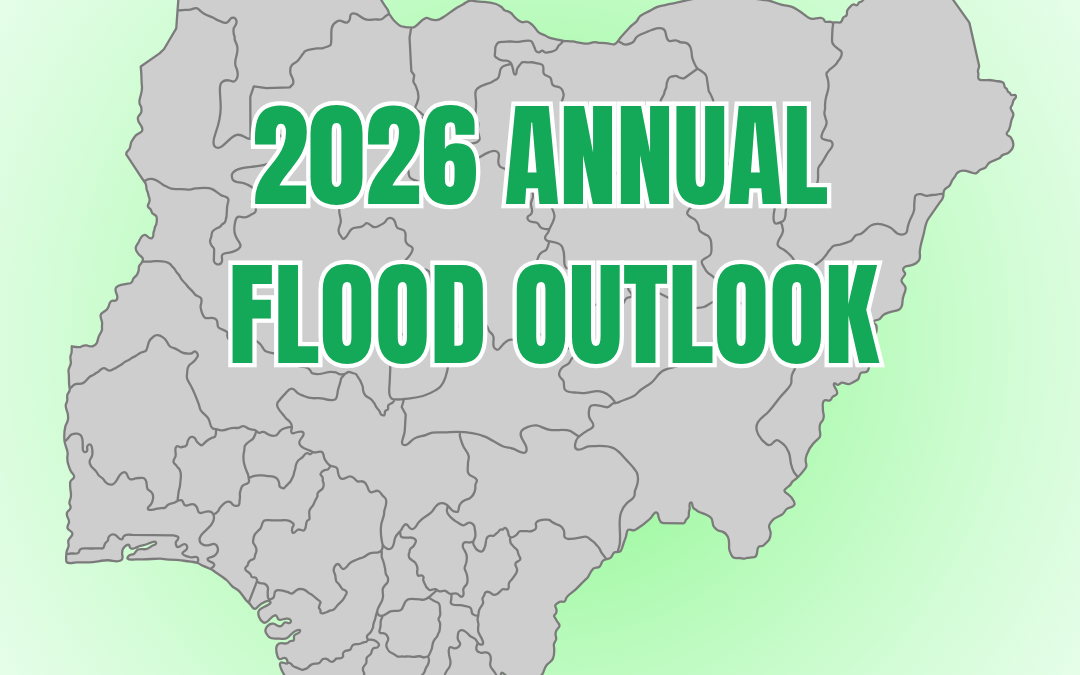
Flooding continues to pose a significant threat to lives, livelihoods, infrastructure, and agricultural productivity across Nigeria. Based on projections from the Nigeria Hydrological Services Agency (NIHSA), the 2026 Flood Guide for Borno State provides residents, communities, and stakeholders with timely information on flood risks, preparedness strategies, and practical actions to reduce the impact of flooding. By encouraging early planning, community resilience, and coordinated response efforts, this guide aims to support safer communities and minimize the human and economic costs of flooding.
Download the 2026 Flood Guide for Borno State
by ejsdprogram | Jul 8, 2026 | Annual Flood Outlook
Flooding continues to pose a significant threat to lives, livelihoods, infrastructure, and agricultural productivity across Nigeria. Based on projections from the Nigeria Hydrological Services Agency (NIHSA), the 2026 Flood Guide for Adamawa State provides residents, communities, and stakeholders with timely information on flood risks, preparedness strategies, and practical actions to reduce the impact of flooding. By encouraging early planning, community resilience, and coordinated response efforts, this guide aims to support safer communities and minimize the human and economic costs of flooding.
Download the 2026 Flood Guide for Adamawa State
by ejsdprogram | Jul 8, 2026 | Annual Flood Outlook
Flooding continues to pose a significant threat to lives, livelihoods, infrastructure, and agricultural productivity across Nigeria. Based on projections from the Nigeria Hydrological Services Agency (NIHSA), the 2026 Flood Guide for Abia State provides residents, communities, and stakeholders with timely information on flood risks, preparedness strategies, and practical actions to reduce the impact of flooding. By encouraging early planning, community resilience, and coordinated response efforts, this guide aims to support safer communities and minimize the human and economic costs of flooding.
Download The 2026 Abia State Flood Guide
by Akinmayowa Shobo | Oct 31, 2025 | COP30
Africa is entering COP30 not as a spectator, but as a co-architect of global climate governance. The old narrative of a continent waiting for assistance no longer fits. From Lagos to Nairobi, Accra to Kigali, and all the way to small fishing communities and informal youth innovation hubs, Africans are raising a fundamental question:
If climate finance is meant to protect the most climate-vulnerable people, why isn’t it reaching them?
This is the conversation HEDA Resource Centre is taking to Belém, Brazil. At COP30, we will host a high-level side event centered on accountability, fairness, and local leadership in climate financing.
Event Details
Title: Reimagining Climate Finance in Africa: Accountability, Justice & Local Leadership
Date: Saturday, 15 November 2025
Time: 13:15 – 14:45
Venue: Room 2, COP30 Venue, Belém, Brazil
Why This Matters Now
Africa is already innovating its way through climate uncertainty — with women-led cooperatives restoring land, youth climate-tech innovators building early-warning solutions, and communities advancing agroecology, mangrove protection, and clean-energy mini-grids. This is not a continent waiting to act; it is a continent acting, often with limited support.
Yet the global climate finance system has not caught up. Too many funds remain trapped in bureaucracy, delivered as loans rather than grants, or diverted into projects that never reach frontline communities. Meanwhile, debt burdens grow, carbon deals risk undervaluing African resources, and accountability frameworks often stop at elite-level reporting not community-level delivery.
COP30 is a crucial juncture. This is not simply about money; it is about power, fairness, and trust in global climate cooperation.
What Our Session Will Explore
We are gathering African voices and global partners to discuss:
- Rebalancing global lending rules so climate finance helps, rather than indebts
- Grant-based climate support and meaningful reform of adaptation finance
- Strengthening transparency, public registers, and civic monitoring
- Prioritizing communities — not middle-men — in carbon and nature finance
- South–South accountability alongside North–South equity
- Protecting civic space and enabling media to follow the money
- Financing youth climate tech, women’s cooperatives, and local resilience
- Community benefit frameworks for energy transition and mineral extraction
The focus is not on rhetoric, but on practical pathways: debt-for-climate swaps, community-driven funds, climate transparency dashboards, local adaptation financing, and youth innovation ecosystems.
Join Us in Belém
Africa is not asking to be saved.
Africa is reshaping climate governance — with clarity, competence, and conviction.
Room 2. November 15. 13:15–14:45.
Let’s reimagine climate finance and make accountability standard, not optional.

by Akinmayowa Shobo | Oct 31, 2025 | COP30
Across climate conferences and policy meetings, big agriculture companies will likely speak the language of sustainability: “climate-smart farming,” “precision livestock systems,” “nature-positive production.” The lingo is modern, reassuring, and polished. But words alone do not make a practice sustainable.
Increasingly, some industrial livestock and agribusiness companies are dressing up old, harmful practices in new “climate-friendly” language. They pollute rivers, crowd animals, destroy soil health, and push local farmers off their land — but instead of acknowledging this, they repackage it with clever branding. Suddenly, crowded factory-style animal farms are called “productivity hubs,” as if efficiency justifies pollution and suffering. Massive monocrop plantations that rely on chemicals are renamed “innovation clusters,” even though they strip soil of life and weaken farming communities. And when corporations expand into land that once belonged to villages and pastoral families, it is framed as “investment for national growth,” even when those same communities lose their livelihoods. In other words, harmful agribusiness models don’t change, only the marketing does.
This is not climate action; it is strategic messaging. It is not about protecting the earth or feeding our people; it is about protecting profit and power. Instead of fixing the damage caused by industrial farming, some corporations simply change the language and hope no one asks questions. They polish their image, not their practices. They invest in advertisements and “sustainability statements,” not clean water or healthy soil. It is a communication strategy, not a climate solution, more about looking responsible than being responsible.
Greenwashing thrives where communities do not have access to information, and where policy spaces favour corporate voices over everyday farmers. The result is a quiet takeover of national food narratives.
Key warning signs are already visible across multiple African countries:
- foreign firms acquiring fertile land for export-oriented livestock feed
- domestic small producers pushed out of local markets
- youth encouraged toward contract farming tied to corporate supply chains
- traditional knowledge dismissed as “unscientific” despite global evidence supporting it
Agroecology challenges this model because it changes who holds power. It is simply farming that works with nature, not against it: farmers growing different crops together, using compost instead of harmful chemicals, keeping animals in open spaces, saving native seeds, and feeding local communities first. It is the knowledge our parents and grandparents used, strengthened by modern science. It builds soil instead of stripping it, keeps water clean, and gives farmers control over their land and decisions instead of tying them to expensive inputs and foreign agribusiness contracts.
This is exactly why it does not receive the same support or funding. Not because it does not work evidence shows it strengthens food security, creates jobs, and builds resilience but because it shifts power away from corporations that profit when farmers depend on purchased seeds, fertiliser, and feed. Agroecology keeps value in communities, not boardrooms.
As we approach COP30 and other global forums, Africa must be clear:
We cannot afford climate policies that push us toward systems that pollute our water, weaken our soils, undermine local farming, and leave farmers economically vulnerable while companies accumulate profit and influence.
Sustainability is not a slogan, it is measurable impact: healthy soils, safe water, thriving farmers, and resilient local economies.
Africa’s food systems debate must be rooted in sovereignty and accountability, not public-relations language. Policymakers should ask three simple questions before endorsing any “modernisation” plan:
- Who controls the land, seeds, and markets under this model?
- What long-term health and ecological effects will communities face?
- Does this strengthen or weaken Africa’s autonomy in feeding itself?
Food security cannot be outsourced.
Our food future must be negotiated, not advertised.
Africa deserves a food system designed in Africa, by Africans, for Africans — not for profit margins wrapped in climate language.